A note on this list: Flag design is subjective, and every flag in the world carries meaning for the people it represents. This selection focuses on visual design characteristics — not on judgements about any country or its people.
🎨 Eight Flags That Stand Out Visually

1. Bhutan — The Thunder Dragon (Druk)
Bhutan's flag features a detailed white dragon clutching jewels against a divided orange and yellow field. It is one of the few flags to depict a mythological creature in full detail, and the craftsmanship required to render it accurately is remarkable.
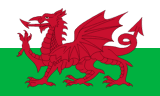
2. Wales — The Red Dragon (Y Ddraig Goch)
Wales carries one of the most striking symbols in vexillology — a red dragon on a green and white field. The dragon has represented Wales since at least the 5th century and gives the flag immediate visual impact.

3. South Africa — The Unity Flag
South Africa's post-apartheid flag (1994) is a deliberate exercise in inclusive design: six colours converging in a Y-shape to represent the meeting of the country's diverse communities. It is widely cited in design circles for its originality.

4. Canada — The Maple Leaf
Adopted in 1965 after a nationwide competition, Canada's flag succeeds through simplicity: a single, instantly recognisable maple leaf centred on a red-and-white field. It consistently ranks highly in international flag design surveys.

5. Cyprus — Island Silhouette & Olive Branches
Cyprus features a copper-coloured map of the island above two olive branches on a white field — an unusual and peaceful design that directly references the country's geography and its aspirations.
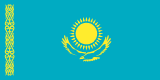
6. Kazakhstan — Sun, Eagle & Pattern
Kazakhstan's sky-blue flag with a golden sun and soaring eagle, and a traditional Kazakh ornamental band on the left, is one of the most distinctive flags to emerge from the post-Soviet era.

7. Malawi — Rising Sun
Malawi's flag features a rising red sun against a black stripe at the top, representing the dawn of freedom and hope for the continent — a design with strong symbolic clarity.

8. Singapore — Crescent & Stars
Singapore's red-and-white flag with a crescent moon and five stars is a study in clean, meaningful design. Each element carries specific symbolism: the crescent represents a young nation; the five stars stand for democracy, peace, progress, justice, and equality.
📐 What Makes a Flag Design Effective?
Vexillology (the study of flags) has a few widely accepted design principles. The North American Vexillological Association (NAVA) recommends that a good flag should:
- Be simple enough for a child to draw from memory
- Use meaningful symbolism
- Use two or three basic colours
- Not contain lettering or seals that become illegible at small sizes
- Be distinctive from other flags
Flags like Canada's Maple Leaf and South Africa's unity flag score highly on most of these criteria. Bhutan and Wales deliberately break the "simplicity" rule — and succeed precisely because their complexity is so distinctive.
🌐 Every Flag Has a Story
The flags not on this list are not "worse" — they carry equally rich histories. Denmark's Dannebrog (the world's oldest national flag still in use, dating to around 1370) shaped the design of every other Nordic flag. Japan's Hinomaru is one of the most immediately recognisable flags in the world through its radical simplicity. Exploring any country's flag reveals layers of history, culture, and aspiration.
💡 Did you know? Nepal is the only country with a non-rectangular national flag — its double-pennant shape is unique in the world.
🌍 How many of these flags do you recognise?
Test yourself on flags from every country in the world!
🌍 Take the Flag Quiz