The record holder: Denmark's Dannebrog
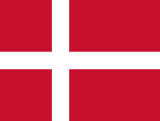

The Dannebrog ("Danish cloth" or "red cloth") is officially recognized as the world's oldest national flag still in use. According to legend, it fell from the sky during the Battle of Lyndanisse in Estonia in 1219, appearing at the moment Danish forces were on the verge of defeat. The miraculous appearance turned the tide, and the red flag with a white cross has been Denmark's symbol ever since.
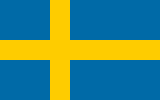
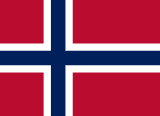
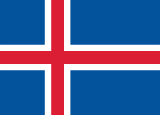
The design is documented in a manuscript from 1370, making it at minimum 650 years old. The Guinness World Records recognizes it as the oldest continuously used national flag design. Every Nordic nation's flag — Sweden, Norway, Finland, Iceland — draws directly from the Scandinavian cross it introduced.
📜 Fun fact: Denmark's Dannebrog is also the world's most widely "copied" flag design — the Scandinavian cross appears on the flags of five countries, all inspired by the Danish original.
A brief history of flags
Ancient & medieval: army banners, not nation flags
The modern concept of a "national flag" didn't exist in ancient times. What we'd now call flags were used on battlefields to identify units and commanders, or to display royal and noble heraldry. A king's banner was a personal symbol, not a symbol of a country or people.
1219 — Denmark's Dannebrog
The first flag design still in use today appears. The cross motif it introduces will spread across Northern Europe over the following centuries.
1572 — The Dutch tricolor
During the revolt against Spanish rule, the Dutch adopted an orange-white-blue tricolor (later changed to red-white-blue). This was one of the first flags to represent a political cause rather than a monarch — a milestone in the history of national identity.
1777 — The Stars and Stripes
The United States adopts its first flag, with 13 stars and 13 stripes for the original colonies. As states joined the union, stars were added — the current 50-star version has been in use since 1960.
1789 — France's Tricolor
The French Revolution produces the blue-white-red tricolor, which becomes a global template. The idea that a flag should represent "the people" rather than the crown spreads rapidly across Europe and eventually the world.
20th century — the great wave of new flags
Decolonization after World War II produces dozens of new flags as Asian and African nations gain independence. The majority of the world's 193 national flags were designed and adopted during this period.
2011 — the world's newest flag: South Sudan
When South Sudan declared independence from Sudan, it adopted a flag with six colors — one of the most complex among current national flags — symbolizing the nation's diverse people and its struggle for independence.
Japan's Hinomaru: older than you might think

Japan's simple red-circle-on-white flag was formally adopted in 1870, but its history is far older. Warlords of the Muromachi period (14th–16th centuries) used the sun disc as a battle standard, and it appears in historical records going back even further. The name "Hinomaru" (日の丸) literally means "circle of the sun," reflecting Japan's self-designation as "the land of the rising sun."
The design's simplicity is considered one of its greatest strengths: it is instantly recognizable at a distance and has not needed modification in over 150 years of official use.
How many historic flags do you know?
European flags have centuries of history.
Filter by region and test yourself.