The six most common flag colors and what they mean
🔴 Red

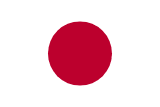
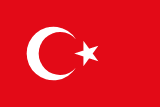

The single most-used color in national flags. Red symbolizes courage, blood, revolution, passion, and strength. It appears most often in flags of nations that fought for independence, and is a staple of communist and socialist states.
In Islamic tradition, red also appears frequently as a symbol of the historical caliphates. Brazil's red stands for the blood spilled in Brazil's independence movement; China's red represents the communist revolution.
🔵 Blue
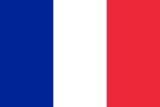



Blue represents the sea, the sky, peace, freedom, justice, and loyalty. Island nations and maritime countries often use blue to honor the ocean. In Europe, it became strongly associated with liberty after the French Revolution.
The United Nations flag uses blue specifically to symbolize peace. Scandinavia's blue-crossed flags evoke both sky and sea. Australia and New Zealand carry blue as part of their British Commonwealth heritage.
🟢 Green

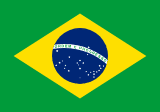


Green symbolizes nature, agriculture, fertility, hope, and Islam. It's ubiquitous in African nations whose economies depend on farming, and is the sacred color of Islam — the Prophet Muhammad is said to have worn a green turban.
Saudi Arabia, Pakistan, and other Islamic nations use green as their primary color for this religious reason. Brazil's green represents the Amazon rainforest. Ireland's green is tied to its Catholic identity and lush landscape.
🟡 Yellow / Gold

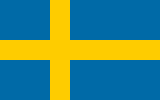
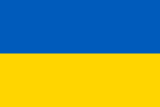
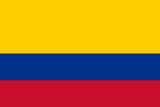
Yellow and gold symbolize the sun, wealth, mineral resources, happiness, and optimism. Gold is often used quite literally — resource-rich nations display it as a direct reference to their natural wealth.
The Pan-African color scheme (green, yellow, red) uses yellow to represent Africa's mineral wealth. Sweden's yellow cross represents the sun. Brazil's yellow diamond symbolizes the country's gold reserves.
⚪ White
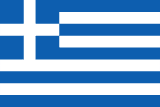


White represents peace, purity, honesty, snow, and surrender. It is the most universally positive color across cultures — associated with cleanliness, good faith, and the absence of conflict.
Japan's white represents purity and integrity. Switzerland's white cross on red symbolizes both the Alpine snow and the nation's neutrality. The white flag of surrender draws directly from this symbolism.
⚫ Black
Black symbolizes the land, ethnic heritage, past struggles, strength, and determination. In Africa, it frequently represents the dignity of the African people and the hardships of colonialism and slavery.
Germany's black represents the country's resolve and unity. Kenya and Zimbabwe use black to honor their African heritage. Papua New Guinea's black stands for the strength of its people and their cultural traditions.
Regional color patterns: a shortcut for flag quizzes
Middle East & Islamic world
The "Pan-Arab colors" — red, white, black, and green — appear across Arab nations as a symbol of Arab nationalism. Jordan, Iraq, Yemen, Syria, and Sudan all draw from this palette, often combined with a crescent or star.
Africa (sub-Saharan)
The Pan-African colors — green, yellow, red — originate from Ethiopia's flag. Because Ethiopia successfully resisted European colonization, its colors became a symbol of freedom and solidarity adopted by newly independent African nations in the 20th century.
Scandinavia
The five Nordic countries (Denmark, Sweden, Norway, Finland, Iceland) all use the Scandinavian cross design with two-color schemes. Knowing the colors for each is the main challenge: Sweden (blue/yellow), Denmark (red/white), Norway (red/blue/white), Finland (white/blue), Iceland (blue/red/white).
💡 Quiz shortcut: If a flag is dominated by green → likely Africa or Islamic world. Red, white, black → likely Arab nation. Three colors arranged in stripes of green, yellow, red → almost certainly sub-Saharan Africa. This alone can narrow four choices down to two.
See if you can spot the patterns!
Filter the quiz by region and watch
the color patterns become obvious.