The reason: Pan-African colors
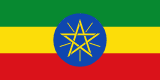
The shared green-yellow-red color scheme that appears across sub-Saharan Africa is known as the Pan-African colors. These colors come from one specific source: the flag of Ethiopia.
Ethiopia holds a unique place in African history — it is one of the only African nations that successfully resisted European colonization, famously defeating Italy at the Battle of Adwa in 1896. This made Ethiopia a symbol of African dignity and resistance across the continent. When other African nations began winning independence in the mid-20th century, many adopted Ethiopia's colors as a tribute and a statement of Pan-African solidarity. Ghana led the way in 1957, and dozens of others followed.
💡 Key insight: Green = fertile land & hope. Yellow = mineral wealth & the sun. Red = blood shed for independence. These three meanings resonate universally across Africa, which is why the combination proved so popular.
Four groups to organize 54 African flags
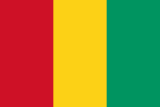
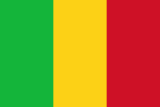
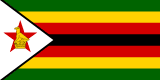
🇬🇳 🇲🇱 🇸🇳 🇨🇲 🇬🇭
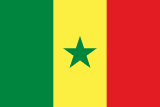
Guinea, Mali, Senegal, Cameroon, and others. French colonizers imposed vertical stripe layouts modeled on the French Tricolor. After independence, many kept the vertical format but swapped in Pan-African colors. The key differentiator is whether there's a central emblem or star (Senegal = green star; Cameroon = yellow star; Mali = plain).
🇪🇹 🇧🇯 🇧🇫 🇨🇬 🇹🇬
Ethiopia, Benin, Burkina Faso, Republic of Congo, Togo, and others. Ethiopia's is the most distinctive — it has a blue circle with a yellow star in the center. This emblem is the key identifier. Without an emblem, pay attention to stripe order.
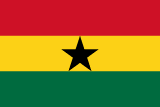
🇿🇼 🇰🇪 🇲🇿 🇬🇭
Zimbabwe, Kenya, Mozambique, Ghana, and others. These flags add black to represent the African people. Kenya and Zimbabwe both feature distinctive emblems (Kenya: Maasai shield and spears; Zimbabwe: Zimbabwe Bird + red star). Mozambique uniquely includes an AK-47.
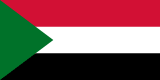
🇪🇬 🇱🇾 🇩🇿 🇲🇦 🇹🇳 🇸🇩
Egypt, Libya, Algeria, Morocco, Tunisia, Sudan. North Africa is Arab and Islamic, so these flags use Pan-Arab colors (red, white, black, green) and often include a crescent and star. They look completely different from sub-Saharan African flags — immediately identifiable by the Islamic motifs.
Three questions that identify almost any African flag
- Is there a crescent or star? → North African / Islamic flag
- Are the stripes vertical or horizontal? → Vertical often means former French colony
- Is there a central emblem, animal, or symbol? → Use that to pin down the country; plain flags rely on stripe order
The trickiest lookalike pairs in Africa
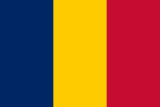
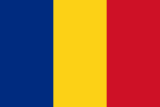
Guinea vs Mali: Both are vertical green-yellow-red tricolors. Guinea goes red-yellow-green (left to right); Mali goes green-yellow-red. Remember: Guinea's red is on the left (west) — Guinea is farther west on the map.
Cameroon vs Senegal: Both are vertical green-yellow-red tricolors with a central star. Cameroon's star is yellow; Senegal's star is green. "Cameroon's star matches the yellow stripe."
Côte d'Ivoire vs Ireland: An Africa-Europe trick pair. Côte d'Ivoire is orange-white-green; Ireland is green-white-orange. They're mirror images. If the orange is on the left, it's Côte d'Ivoire.
Master African flags with targeted practice!
Filter the quiz to Africa only and drill
until the patterns become automatic.