Soccer is one of the most widely played sports on earth, governed by FIFA with 211 member associations. Global playing population is estimated at around 260 million. Which countries have the most soccer players? And does a large playing population mean a stronger national team? We dig into the numbers — country flags included — to map the world of soccer.
Global Soccer Playing Population
約2億6,000万人
Total global soccer population based on FIFA Big Count (registered + active players)
Approximately 3–4% of the world's population plays soccer
The global soccer playing population is estimated at around 260 million — an increase of approximately 140 million since 2006. However, definitions of "playing population" vary widely by country: some figures include only registered players, while others add recreational players. The data in this article combines FIFA publications and other surveys and should be read as reference estimates.
Soccer Population by Country — Top 15
1
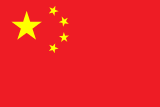
🇨🇳 China
Est. 26 million+
Sheer population size (1.4 billion) drives the number. Government-led soccer push under Xi Jinping has expanded participation rapidly, but the participation rate remains under 2%.
2

🇺🇸 United States
Est. ~24 million
Participation rate of ~7.5% surpasses Brazil. As a 2026 World Cup host, soccer fever is rising fast. MLS expansion is adding fuel.
3

🇮🇳 India
Est. 20 million+
Population of 1.4 billion keeps absolute numbers high despite a low 1.4% rate. The Indian Super League (ISL) is driving rapid growth — potential is enormous.
4

🇩🇪 Germany
Est. ~16.3 million
1.63 million registered players and a stunning 20.1% participation rate — one in five Germans plays soccer. The Bundesliga leads Europe in attendance.
5
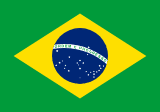
🇧🇷 Brazil
Est. ~13.2 million (registered) + vast informal sector
1.32 million registered players and 6.4%. Add the vast unregistered street soccer culture and the true number is far higher. Brazil produces more professional players than any other country.
6
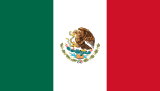
🇲🇽 Mexico
Est. 9–13 million
The FIFA 2023 Professional Football Report ranks Mexico first globally with 9,464 professional players. As a 2026 host nation, it also has North America's largest total playing population.
7
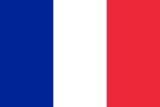
🇫🇷 France
Est. 4.8–5 million
Over 18,000 registered clubs in the FFF. Immigration from North and West Africa has diversified and deepened France's talent pool, underpinning back-to-back World Cup finals in 2018 and 2022.
8

🏴 England
Est. 4 million+
The birthplace of soccer. 40,000+ registered clubs, 5,582 professional players (FIFA 2023). The Premier League is the world's largest soccer business.
9
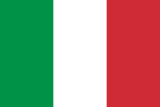
🇮🇹 Italy
Est. 4.8–5 million
8.3% participation rate — solidly high. Yet Italy failed to qualify for 2018, 2022, and now 2026 (three consecutive absences). A textbook case of high playing numbers not guaranteeing on-pitch success.
10
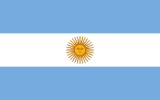
🇦🇷 Argentina
Est. ~3 million (registered) + large informal sector
Second only to Brazil in professional player exports (CIES). Led by Messi, Argentinian players fill leagues worldwide. ~7% participation rate reflects a deep soccer culture.
11
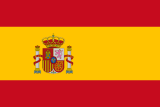
🇪🇸 Spain
Est. ~1.1 million (RFEF registered) + ~5 million broadly
~1.1 million RFEF registered players (2022). 8,560 professional players — second only to Mexico (FIFA 2023). La Liga is one of the world's top two leagues.
12

🇯🇵 Japan
Est. ~3.7 million (adults, 1+ times/year)
Sasakawa Sports Foundation 2024 survey: 3.69 million adults play annually. JFA registered players: ~840,000 (2024). Separate youth population: 2.81 million under-20s.
13
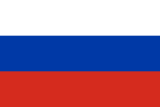
🇷🇺 Russia
Est. 3.5–4 million
The 2018 World Cup hosting sparked a surge. International suspension since 2022 has dampened growth, but domestic league activity remains strong despite the cold climate.
14
🇰🇷 South Korea
Est. 2.5–3 million
The 2002 World Cup semi-final run still powers the nation's passion. K League at home and prolific exports to the Premier League form a strong dual system.
15
🇳🇬 Nigeria
Est. 3–4 million
Africa's largest population (~220 million) underpins the numbers. Heavy migration to the UK and Europe means Nigerian-heritage players appear in national teams worldwide.
※ Data compiled from FIFA Big Count, FIFA Professional Football Report 2023, national federation figures, and Sasakawa Sports Foundation 2024 survey. Definitions of "playing population" differ by country (registered only vs. annual participation etc.), making strict cross-country comparison difficult. Use as a guide for general trends.
High Playing Population ≠ Strong National Team
The striking paradox: China (#1) and India (#3) rank nowhere near the top of the FIFA standings. Meanwhile, Germany (#4, population 83 million) boasts a 20% participation rate — the world's deepest soccer culture — directly linked to their four World Cup titles.
Participation Rate: Who Are the Real Soccer Nations?
 🇩🇪 Germany
 🇺🇾 Uruguay
 🇨🇱 Chile
 🇪🇸 Spain
 🇮🇹 Italy
 🇧🇷 Brazil
 🇯🇵 Japan
 🇨🇳 China
💡 The "6% threshold" rule: Soccer consultant Kenichi Yukino argues that "once participation exceeds 6% of the population, soccer becomes the undisputed #1 sport in that country." Germany (20%), Brazil (6.4%), Spain (~9%), and France (~7%) all clear this bar — and all are World Cup perennial contenders.
Why Big Numbers Don't Guarantee a Strong Team
China has many players yet a modest FIFA ranking. The US has high numbers and a strong participation rate but still underperforms. In China, the prevailing belief that "you can't make a living from soccer" means talented youth are diverted to other paths before they develop fully.
What raises competitive level is not headcount but three qualities:
- Quality of development systems: coaching licenses, club academy infrastructure
- Depth of soccer culture: whether children naturally gravitate to the game
- Quality of the top domestic league: whether world-class competition is available at home
Germany's 20% rate dwarfs Brazil and Mexico. Combined with an elite development system, that high base participation translates directly into four World Cup titles.
🇯🇵 Japan's Soccer Population: Latest Data (2024)
369万人
Adults playing 1+ times/year
(Sasakawa Sports Foundation 2024)
84万人
JFA registered players
(2024 data)
281万人
Under-20 players
(strong junior base)
3.8%
Participation rate
(below the 6% powerhouse threshold)
JFA registrations peaked at ~960,000 in 2014 and declined thereafter, but the latest data shows signs of recovery.
Among Japanese sports, soccer ranks second (behind kendo) by registered players — the undisputed #1 ball sport. Yet a 3.8% participation rate still trails Europe's top nations. Japan's growing presence in the top-five European leagues (20+ players some seasons), a stable FIFA ranking around 20th, and eight consecutive World Cup appearances (including 2026) show steady cultural deepening.
Conclusion: Culture Runs Deeper Than Raw Numbers
Raw numbers put China, the USA, and India at the top. But true powerhouses are built on participation rate — what share of the population plays — and the quality of development culture.
Germany (20%), Chile (14.5%), and Uruguay (11%) consistently punch above their weight precisely because soccer is woven into daily life. With the 2026 World Cup expanding to 48 nations, watch for rising cultures to make their mark.
⚽ Know the flags of the top soccer nations?
Test yourself on all 48 World Cup 2026 nations — and climb the global leaderboard!
⚽ Take the World Cup Quiz
Related Articles