① Pan-African Colors: Red, Yellow, Green
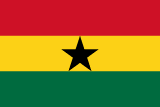 Ghana
Ghana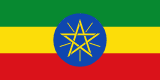 Ethiopia
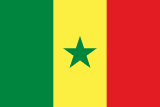 Senegal
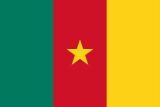 Cameroon
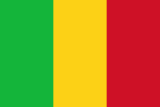 Mali
Mali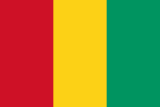 Guinea
The Pan-African colors trace back to Ethiopia — the only African nation to successfully resist European colonization. Ethiopia's green-yellow-red tricolor, dating to 1897, became a symbol of African freedom and dignity in the early 20th century.
Jamaican activist Marcus Garvey (1887–1940) theorized the colors, framing red as the blood shed for liberation, yellow as Africa's mineral wealth and sunshine, and green as the fertile land. The Rastafari movement amplified these colors globally. When Ghana became the first sub-Saharan country to gain independence in 1957, it adopted these colors — and the wave of African independence in the 1960s carried the combination across the continent.
🎯 Quiz tip: African flags with red-yellow-green in vertical stripes tend to be former French colonies — Guinea, Mali, Cameroon, Senegal all gained independence from France. The vertical stripe layout mirrors the French tricolor's structure.
When Black Is Added: Ghana, Mozambique, Zimbabwe
Some Pan-African flags add black — a fourth color Garvey associated with the skin color of African people themselves. Ghana's black star and Zimbabwe's black stripe are the most visible examples. The black star on Ghana's flag directly inspired other liberation movements worldwide.
② Pan-Arab Colors: Black, White, Green, Red
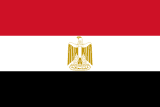 Egypt
Egypt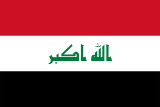 Iraq
Iraq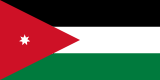 Jordan
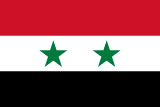 Syria
Syria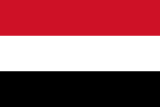 Yemen
Yemen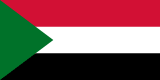 Sudan
SudanPan-Arab colors were born during the Arab Revolt of 1916 against Ottoman rule. The flag raised during that revolt combined black, white, green, and red — each representing a major Arab dynasty: the Abbasids (black), Umayyads (white), Fatimids (green), and Hashimites (red).
As Arab nationalism surged in the 1950s and '60s, Egypt, Syria, and Iraq each adopted variations of these four colors. The combination spread through the region as a declaration of shared Arab identity. Today, most members of the Arab League use at least two of these four colors.
🎯 Quiz tip: Egypt, Syria, Iraq, and Yemen all use red-white-black horizontal stripes and are notoriously easy to confuse. The key is the center: Iraq has Arabic script, Egypt has the Eagle of Saladin (a gold eagle), Syria has two green stars, and Yemen has nothing.
③ Pan-Slavic Colors: Blue, White, Red
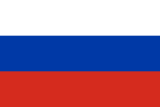 Russia
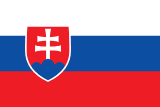 Slovakia
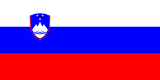 Slovenia
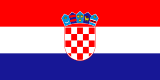 Croatia
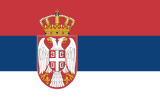 Serbia
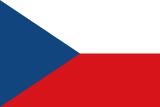 Czechia
Pan-Slavic colors were formalized at the 1848 Prague Slavic Congress, where delegates from across Central and Eastern Europe sought a common visual identity. They borrowed the blue-white-red combination from France's revolutionary tricolor — the colors of liberty — and reframed them as the colors of Slavic solidarity.
Russia's imperial blue-white-red flag gave the combination prestige. As Russian influence shaped Central and Eastern European politics throughout the 19th century, Slavic nations successively adopted variations of these three colors upon achieving independence or statehood.
Why Red, White, and Blue Appears Everywhere Else Too
Beyond Slavic nations, red-white-blue appears on flags of former French colonies (as a tribute to the revolutionary ideal), countries influenced by Britain or America, and nations that simply wanted to signal alignment with liberal democracy. The result: red-white-blue is the single most common three-color combination on Earth's national flags.
④ The Scandinavian Cross: Five Nations, One Design
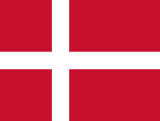 Denmark
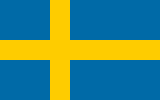 Sweden
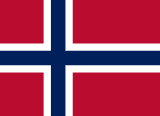 Norway
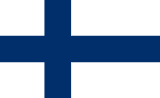 Finland
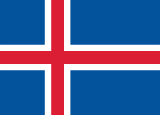 Iceland
All five Nordic nations share the Scandinavian cross (Nordic Cross) — a cross whose vertical bar is offset to the left. Every one of them traces this design back to Denmark's Dannebrog (1219), the world's oldest national flag in continuous use.
Sweden adopted the cross design in the 17th century. Norway, Finland, and Iceland each took it on at independence, changing only the colors. The shared design reflects centuries of cultural, linguistic, religious, and political proximity among the Nordic peoples — the cross is both a Christian symbol and a declaration of belonging to a common civilization.
🎯 Quiz tip: Finland = white field, blue cross (think snow). Sweden = blue field, gold cross (think sun). Denmark and Norway both have red fields with white or blue-white crosses. Iceland = blue field, red cross outlined in white.
⑤ The Green of Islam
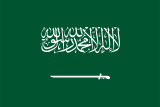 Saudi Arabia
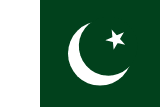 Pakistan
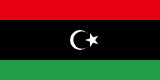 Libya
Libya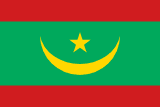 Mauritania
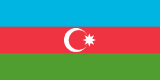 Azerbaijan
Green holds a uniquely sacred place in Islam — tradition holds that the Prophet Muhammad favored green garments, and the color is associated with paradise, life, and prosperity. Saudi Arabia's entirely green flag is the most explicit example; Pakistan's green-and-white flag uses green for Islam and white for religious minorities.
The crescent moon and star (☪️) — now widely recognized as an Islamic symbol — actually originates with the Ottoman Empire rather than Islam itself, but spread globally as the empire's influence expanded. Turkey, Malaysia, Azerbaijan, Pakistan, and many others incorporate this motif, connecting their flags to a shared Ottoman and Islamic heritage.
Similarity Is Never Accidental
Flag designs don't emerge from nowhere. The era of independence, the legacy of colonial rule, religion, the ideals a nation wants to claim — all of these shape the choice of colors. Chad and Romania having nearly identical flags is a genuine historical accident of both gaining French-influenced designs around the same period. But 30 African nations sharing red-yellow-green is a deliberate declaration of continental solidarity. Learning to recognize these color groups doesn't just help in flag quizzes — it opens a window into how the modern world was assembled, one independence movement at a time.
Put your knowledge to the test!
How many Pan-African or Pan-Arab flags
can you identify at a glance?